Meli
- 4.2
- Rating
- 100.00K
- Installs
- Free
- Price

 Analysis by App-foxy
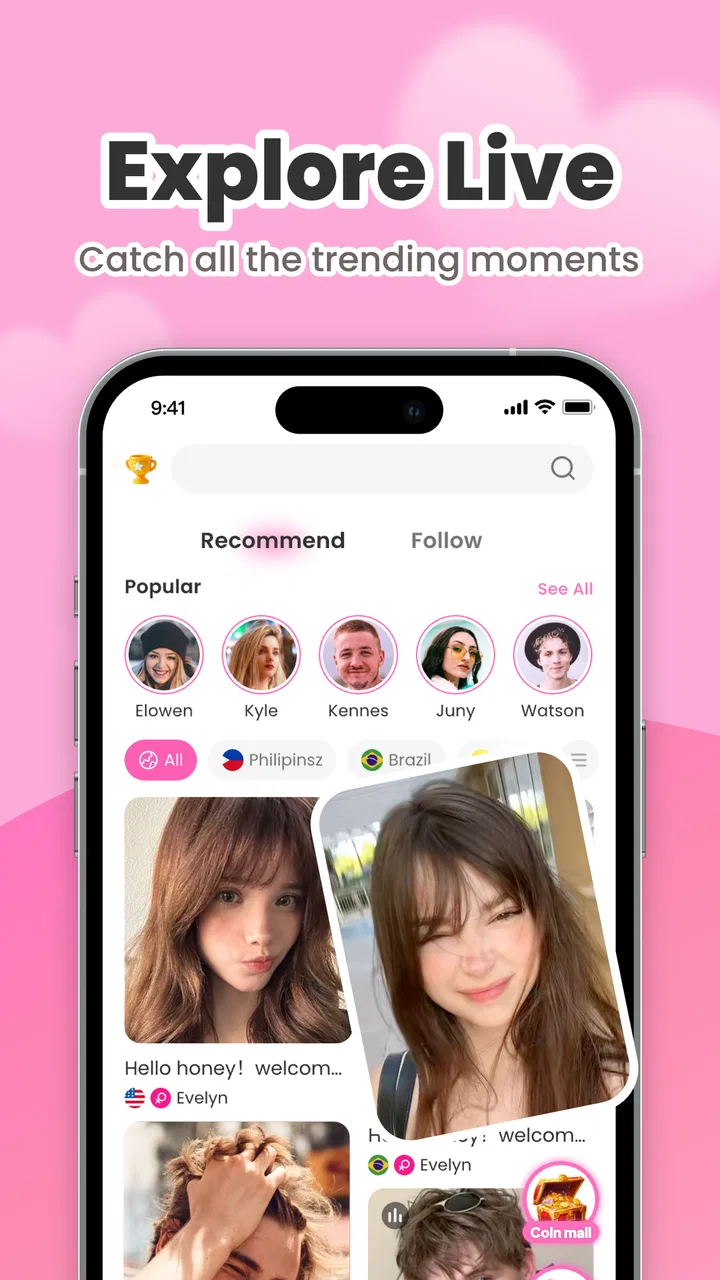
I approached Meli as a social app for people who want more than a passive feed. Its central idea is live interaction: people can appear in real time, share a talent or an everyday moment, and build friendships around that exchange. After spending time with it, my view is fairly clear: Meli is most appealing when you enjoy spontaneous conversation and are willing to participate, but it is less convincing if you only want a polished, predictable way to watch content.
The app sits in the social category and comes from developer Arya wiradiguna. It is free to install, with optional purchases ranging from $0.99 to $99.99 per item. That combination makes the initial commitment easy, although I would still treat the paid elements carefully until I knew how much value I was getting from regular use. Meli is marked for Teen users, so it is aimed at a broader audience than a child-focused community, but that does not remove the need for sensible privacy and spending habits.
How Meli feels in everyday use
The best way to understand Meli is to think of it as a meeting place rather than simply a video player. The live format changes the relationship between the person broadcasting and the people watching. A recorded clip can be edited until it looks perfect; a live room depends on timing, personality and the willingness of viewers to take part. That makes the experience warmer when the conversation works, but also more uneven when a room lacks energy.
You May Also Like

 AccuWeather: Weather Radar
AccuWeather Review: A Quick, Clear Forecast for Everyday Decisions
For everyday plans, the best forecast is the one you can understand quickly. AccuWeather makes rain timing, radar, and local conditions easy to act on, with a few trade-offs.

 Hill Climb Racing
Why Hill Climb Racing Still Turns Crashes Into One More Run
A tiny car, a bumpy hill and one more upgrade: Hill Climb Racing keeps resurfacing because its simple chaos makes every near-miss feel personal.

 AliExpress - Shopping App
AliExpress Makes Global Shopping Feel Personal, but Shoppers Bear the Risk
AliExpress turns a global marketplace into a pocket-sized discovery engine. Its reach is useful, its shopping loop compelling, and its trade-offs easy to miss.

 Lords Mobile: Kingdom Wars
Lords Mobile Is a Kingdom-Building Routine, Not a Quick Match
A case-by-case verdict on the building, battles, device demands, and social commitments that make Lords Mobile rewarding for some players and exhausting for others.

 PDF Scanner app - TapScanner
TapScanner Makes Paperwork Easier to Capture, Check, and Share
TapScanner makes scanning with a phone feel less like a rescue operation and more like a dependable step in getting work done. Its capture tools are useful, though not flawless.

 Block Blast!
 Shows How Much a Puzzle Game Can Leave Out
A quiet grid game shows why puzzle players increasingly value instant clarity, repeatable skill and low-pressure play—and where the genre still needs to catch up.
More From Our News Desk
View All News


I found that distinction important. If I opened the app expecting a carefully arranged stream of finished entertainment, I was likely to judge it too harshly. Meli makes more sense when I treat it as a place to drop into different moments and see where a conversation goes. The appeal is not only the performance itself. It is the possibility of being noticed, responding while something is happening, and returning to people whose style feels comfortable.
The store summary describes a global live-streaming community centered on talents, moments and friendships. In practical terms, that broad focus gives the app a social range that a single-purpose platform may not have. One person may use it to show a creative skill, another may simply talk, and a viewer may move between those experiences depending on mood. That flexibility is a strength, but it also means the quality of the experience depends heavily on the individual rooms available at the time.
For a realistic everyday scenario, imagine finishing work or classes and having twenty minutes before dinner. You could open Meli, browse live activity, and join a room where someone is sharing a skill or talking with viewers. If the host responds naturally, the short break can feel surprisingly social. You might follow the conversation, offer a reaction, or leave when the pace no longer suits you. This is a better fit for small, informal pockets of time than for a planned evening of uninterrupted viewing.
That same scenario shows the app’s first trade-off. Live communities reward patience. The most interesting interaction may not be visible immediately, and a room that looks quiet at first may become enjoyable once people start talking. On the other hand, someone who wants instant discovery, consistent production quality or a clearly organized catalog may prefer a conventional video platform. Meli’s value comes from presence and participation, not from removing every moment of uncertainty.
Why the live format is the app’s strongest argument
Live streaming gives Meli a sense of immediacy that ordinary social feeds often lose. When a creator is responding in the moment, the exchange feels less like consuming a finished post and more like entering a temporary gathering. That can make even a simple talent demonstration or casual conversation feel personal. I also think this format gives smaller personalities room to connect without needing the highly edited presentation expected on larger entertainment networks.
The friendship angle matters just as much as the talent angle. A user does not need to be an accomplished performer to benefit from a social live app. Someone who is comfortable speaking, listening and returning to familiar rooms may find more value than someone with a technically impressive skill but no interest in conversation. Meli therefore works best for people who see broadcasting as a two-way activity.
There is also a useful psychological difference between watching a popular recorded creator and joining a smaller live community. In a recorded feed, the audience can feel invisible. In a live room, participation may be acknowledged directly. I would not assume every room offers the same level of attention, but the possibility of an actual exchange is built into the format. That is the feature I would use as the main reason to try Meli.
My practical tip is to judge a room by its interaction, not only by its topic. A stream about something you like can still feel flat if the host does not engage. Conversely, a modest subject can become enjoyable when the host welcomes questions and keeps the conversation moving. This is a more useful way to explore Meli than opening the first available stream and deciding that the entire app feels the same.
Small habits that make exploration more rewarding
I would begin with a short session rather than leaving the app running in the background for a long time. Give yourself enough time to sample several live spaces, but keep a clear stopping point. This helps separate genuine interest from the simple tendency to keep scrolling. It is especially useful in live apps because the next room always carries the promise of being more engaging than the current one.
Another good habit is to decide what kind of experience you want before opening Meli. If I want conversation, I look for a room where the social exchange is clearly active. If I want to see a talent, I pay more attention to whether the presentation itself holds my interest. Mixing those goals without noticing can lead to an unfair judgment. A quiet discussion is not necessarily a poor stream if I entered looking for a performance.
I would also keep personal boundaries in mind from the beginning. The Teen age classification makes the app accessible to younger users than an adults-only service, but live interaction can still be unpredictable. I would avoid sharing identifying details, treat requests for money or private contact cautiously, and leave any room that makes me uncomfortable. Those are not reasons to reject Meli; they are sensible rules for using any open social environment.
The optional purchases deserve the same deliberate approach. Because the app is free to start, it is tempting to treat small transactions as harmless. I prefer to use Meli long enough to understand what I actually enjoy before spending anything. A purchase may make sense for a user who is deeply involved in the community, but it is not necessary to establish whether the basic social experience suits you.
Where the experience becomes less convincing
Meli’s biggest weakness is also connected to its main attraction: live content is inconsistent by nature. A room can be engaging, awkward, repetitive or simply not relevant to me. The app cannot guarantee that every visit will produce a memorable conversation, because the atmosphere depends on who is online and how they interact. Users who prefer a stable, highly edited experience may find that unpredictability tiring rather than exciting.
The broad purpose can create a second kind of friction. An app that welcomes talents, moments and friendships has many possible directions, but a wide social identity can make discovery feel less focused than it would on a platform built around one subject. If I already know I want music, gaming, professional networking or short comedy clips, a specialist service may help me reach that interest faster. Meli is better for open-ended exploration than for a narrowly defined content mission.
I also would not choose it as my only social platform. Live interaction can be intense, and not every user wants to be available for conversation whenever they open an app. A more traditional feed is often better when I want to catch up quietly, save something for later, or consume content without feeling expected to respond. Meli complements those services more naturally than it replaces them.
The payment model is another point where I would slow down. The free entry is friendly, but the presence of in-app purchases means the most active users may eventually encounter spending decisions. I would keep purchases separate from emotional reactions to a live room. Feeling connected to a host can make a transaction seem more urgent than it really is. Setting a personal limit before using paid features is a simple way to keep the social experience enjoyable.
There is also a difference between popularity and personal fit. Meli has passed one hundred thousand installs and holds an average rating of 4.2 from 265 ratings, which suggests that it has found an audience. I see that as encouraging, not as proof that every user will enjoy it. A live community can be well received overall and still feel wrong for someone who dislikes public interaction, spontaneous conversation or browsing without a fixed destination.
Who should try it, and who should choose another option
I would recommend Meli to someone who enjoys meeting people through real-time conversation, likes discovering informal talent, and does not need every session to be perfectly curated. It may be particularly appealing to users who want to share a skill without building a heavily edited production. The app’s social promise is strongest for people who are comfortable both watching and contributing.
It can also suit a person who feels that ordinary feeds are too distant. If you want the possibility of being acknowledged rather than simply counted as a view, live rooms offer a different kind of connection. That does not guarantee meaningful friendships, but it creates the conditions for them more directly than a passive scroll does.
I would suggest skipping Meli if your priority is privacy through minimal interaction, a distraction-free video library, or a tightly moderated specialist community. Someone looking for professional networking should probably use a service designed around work. Someone who wants long-form entertainment may be happier with an on-demand platform. Someone who dislikes unpredictable social situations may find a recorded-content app more relaxing.
Device compatibility is reasonably broad for an older Android handset, since the app supports Android 7.0 and later. That is helpful for people who do not own a recent phone, although live video can still make the quality of the experience depend on the device, connection and surrounding conditions. I would test it during the times and places where I actually expect to use it rather than assuming that a supported operating system guarantees a perfect experience.
The current version is 1.1.7, and I would keep the app updated through the normal store process. Updates are especially relevant for a live social service because reliability and community tools matter as much as the basic idea. I would not install it solely because of the version number, but I would avoid judging it after an outdated installation if a newer release is available.
My final recommendation
Meli is a worthwhile experiment for users who want a more immediate, people-centered form of social discovery. Its best moments come from the combination of live presence and informal interaction: a host shares something personal, viewers respond, and a short visit turns into a genuine conversation. That is a meaningful difference from endlessly consuming edited posts.
At the same time, I would keep expectations realistic. The app cannot make every room interesting, and its open-ended community will not offer the same focus as a specialist platform. The free starting point makes trying it easy, but I would postpone purchases until I knew that the community and daily rhythm genuinely suited me. I would also use clear privacy boundaries, especially because the service is available to Teen users.
My verdict is positive but selective. Meli is best when you want to participate in a live community, not merely watch one. Try it if conversation, spontaneous talent and the chance to form casual connections sound appealing. Choose a more focused or on-demand alternative if you value predictable content, quiet browsing or a narrowly defined purpose. For the right user, the uncertainty is part of the charm; for everyone else, it may be the reason to move on.
FAQs for Meli
01What is Meli and what can I use it for?
Meli is a mobile shopping and marketplace app that lets users browse products, compare listings, place orders, and manage purchases from a smartphone. Depending on your country, it may also provide payment options, shipping tracking, seller communication, promotions, and digital receipts. The available catalog and services can vary by region, so some features may not appear for every user.
02Is Meli safe to use for shopping and payments?
Meli generally includes account security tools, protected checkout options, order tracking, and systems designed to help buyers and sellers complete transactions more safely. However, users should still check seller ratings, product descriptions, delivery conditions, and return policies before paying. Avoid sharing passwords or verification codes, and contact support through the official app if a transaction looks suspicious.
03Does Meli charge fees for purchases, shipping, or other services?
The final cost on Meli can include the product price, shipping, taxes, payment-related charges, or optional services, depending on the listing and your location. Some sellers may offer free delivery, while others calculate shipping at checkout. Before confirming an order, review the complete price breakdown carefully because promotions, delivery fees, and payment options may change over time.
04How do returns, refunds, and order problems work on Meli?
Meli may offer purchase protection or support for issues such as an item not arriving, arriving damaged, or not matching its description. The exact return period, eligibility requirements, and refund process depend on the product category, seller, payment method, and country. Keep packaging, receipts, tracking details, and conversation records, and open a support request promptly when something goes wrong.
05What permissions and account information does Meli require?
To use Meli, you will normally need to create an account with information such as an email address or phone number, and some transactions may require identity, delivery, or payment details. The app may request permissions related to notifications, location, camera, or storage for features like alerts, address selection, and image uploads. Review the privacy settings and grant only permissions you consider necessary.
Pros
- Wide selection of products from local and international sellers.
- Convenient in-app payments through Mercado Pago integration.
- Shipment tracking and delivery updates are easy to access.
- Buyer protection helps resolve issues with problematic purchases.
- Frequent discounts
- coupons
- and seasonal promotions are available.
Cons
- Product quality and seller reliability can vary considerably.
- Shipping costs may be high for bulky or low-priced items.
- Some listings include limited or unclear product information.
- Returns and refunds may take time
- depending on the seller.
- Notifications and promotional messages can feel excessive.

Meli
Gallery